Whitening is one of the most common cosmetic questions we hear at our Agoura Hills office. Usually it starts with "Do the drugstore strips actually work?" or "Is professional whitening worth it?" The honest answer is that it depends on why your teeth look darker, what dental work you already have, and how sensitive your teeth are.
This guide explains how the main whitening options work, what can affect results, and when it makes sense to have an exam before you start.
Why Teeth Change Color
Not all discoloration is the same, and the type of stain affects which option is likely to help.
Surface (extrinsic) stains sit on the outer enamel. Common sources include coffee, tea, red wine, cola, dark berries, and tobacco. Many surface stains can be reduced with a professional cleaning or a whitening toothpaste, and they usually respond well to bleaching.
Deeper (intrinsic) stains sit inside the tooth. As we age, enamel naturally becomes thinner and more translucent, which lets the yellower layer underneath (dentin) show through. Other causes include certain antibiotics taken in childhood, such as tetracycline, fluorosis from too much fluoride while teeth were forming, and long-term use of some antiseptic mouth rinses. These stains can often be lightened, but they may take longer and may not change as much.
A single dark tooth is a different situation. A tooth that turns gray or brown after an injury or a root canal often changes color from the inside. Whitening the outside of your teeth usually will not match it, and it may need a different approach, such as internal bleaching or a restoration, after an exam.
How Whitening Works
Most whitening products, whether from a dentist or a store, use the same family of ingredients: hydrogen peroxide or carbamide peroxide (which breaks down into hydrogen peroxide). These ingredients pass into the enamel and dentin and break apart the colored compounds that make teeth look darker.
The main differences between options are the strength of the gel, how well it stays on your teeth and off your gums, how long it takes, and whether a dentist is supervising.
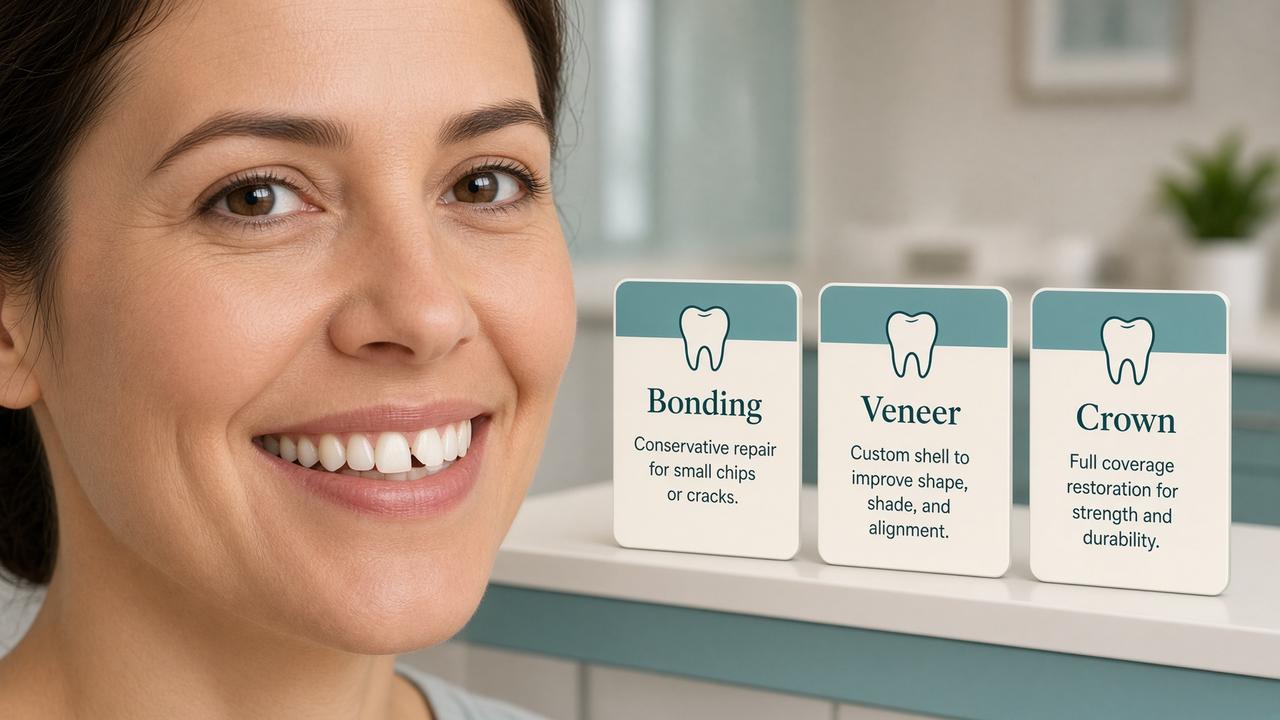
One important point: whitening only works on natural teeth. Crowns, veneers, bonding, and tooth-colored fillings do not change color. If you have dental work on your front teeth, whitening can leave your natural teeth lighter than your restorations. Planning for that ahead of time avoids a mismatch.
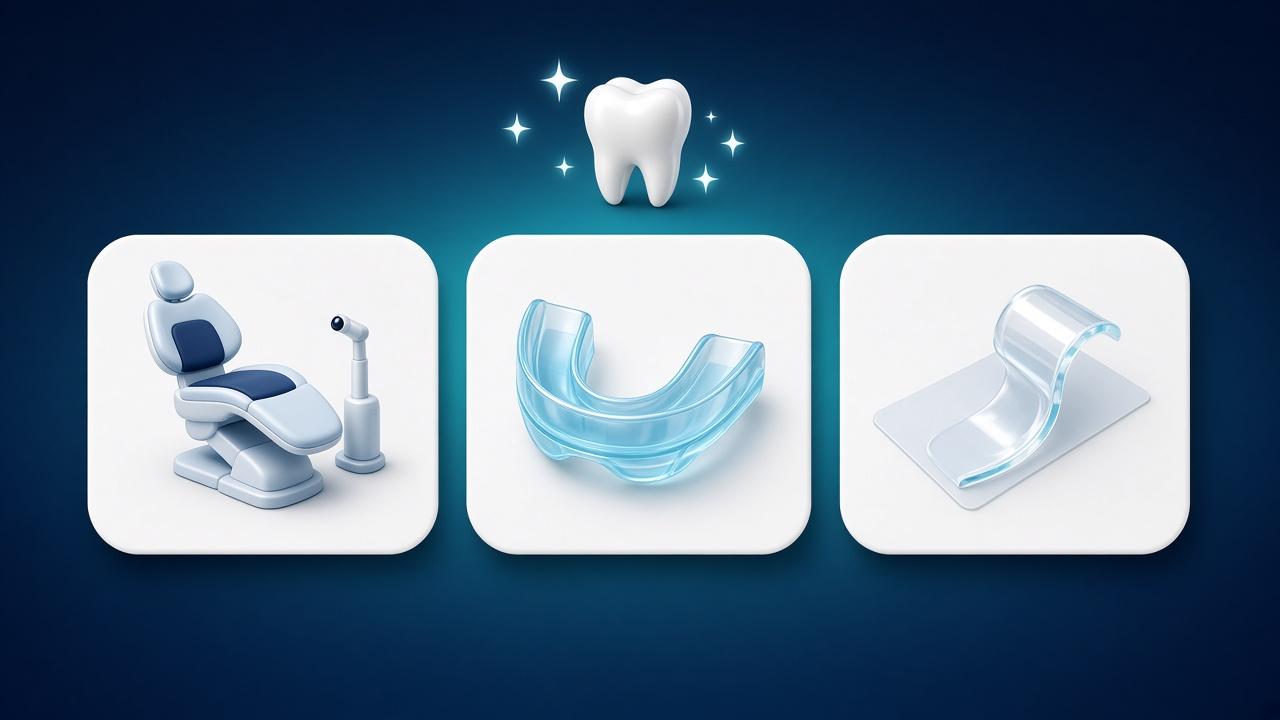
Comparing the Three Main Options
Store-bought strips, gels, and toothpastes
Over-the-counter products use lower peroxide concentrations than professional options. Whitening toothpastes work mostly by polishing away surface stains with mild abrasives; some contain a small amount of peroxide. Strips rely mainly on peroxide to bleach the teeth.
Pros: Lower upfront cost and easy to start.
Things to know: They usually take longer to reach a similar shade, one-size-fits-all strips do not reach every surface evenly, and gel can touch the gums. If you choose an over-the-counter product, the ADA suggests looking for the ADA Seal of Acceptance, which means the company has shown the product meets ADA requirements for safety and effectiveness when used as directed.
Custom trays from your dentist (at-home)
With this option, we take impressions or scans to make thin trays that fit your teeth. You place a professional-strength gel in the trays and wear them at home for the time we recommend.
Pros: The fit keeps gel on your teeth and away from your gums, the strength and schedule can be adjusted to your sensitivity, and the trays can be reused later for touch-ups.
Things to know: It takes consistency over several days to weeks, and results build gradually.
In-office whitening
In-office whitening uses a higher-strength gel applied in the dental chair. Your gums are protected with a barrier first, and the treatment is monitored throughout the visit.
Pros: It is usually the fastest way to see a change, and it is fully supervised.
Things to know: Temporary sensitivity can be more noticeable, and some people combine an in-office visit with take-home trays to reach or maintain their goal.
There is no single "best" option. The right choice depends on your stains, your timeline, your budget, and how your teeth respond. We do not quote prices online because the plan depends on your exam, but our team is happy to go over your options and costs at your visit.
Warning Signs: When Whitening Should Wait
Whitening is a cosmetic treatment, and healthy teeth come first. We recommend an exam before whitening if you have:
Tooth sensitivity or pain, especially to cold or when biting. Sensitivity can be a sign of a cavity, a crack, or exposed roots.
Untreated cavities or leaky fillings. Peroxide gel can irritate a tooth that has an open cavity.
Receding gums or exposed roots. Exposed root surfaces can be more sensitive, and they may not lighten the same way enamel does.
Bleeding or swollen gums. Gum inflammation should be treated first.
One tooth that is much darker than the rest. This needs to be checked, not just bleached.
Crowns, veneers, or bonding on front teeth that you want to match.
A quick exam and cleaning often improves the color on its own by removing surface stains and tartar, and it gives us a true starting shade to measure from.
Side Effects and How to Keep Them Mild
According to the ADA, the most common side effects of whitening are temporary tooth sensitivity and gum irritation. They are usually mild and short-lived, and they tend to be more noticeable with stronger gels. Gum irritation is often caused by gel touching the gums, from poorly fitting trays or strips.
To keep whitening comfortable:
Follow the product or dentist instructions exactly; leaving gel on longer does not mean better results.
Use a toothpaste for sensitive teeth for a week or two before and during whitening, if we recommend it.
Take a day or two off if your teeth feel sensitive, and let us know if it does not settle.
Wipe away any gel that touches your gums.
Stop and call us if you notice sharp or lasting pain.
Keeping Your Results
Whitening results are not permanent. How long they last depends on your habits. To help them last longer:
Rinse with water after coffee, tea, or red wine, or drink them through a straw.
Keep up with brushing twice a day with fluoride toothpaste and cleaning between your teeth daily.
Keep your regular cleanings, which remove new surface stains.
Avoid tobacco.
Ask us about occasional touch-ups using your custom trays.
When to Come In
Schedule a visit before you start whitening if you have any of the warning signs above, if you have dental work on your front teeth, or if you have already tried store-bought products without the results you expected. We will check for cavities and gum problems, look at the type of staining you have, and talk through which option makes sense for your teeth.
Our Agoura Hills office is open Monday, Tuesday, Wednesday, and Friday from 9 a.m. to 6 p.m., and on the 1st and 3rd Saturday of the month from 8 a.m. to 5 p.m. (closed Thursday). Our team speaks English and Mandarin. Call (818) 991-8881 or request an appointment online.
Frequently Asked Questions
Is teeth whitening safe for enamel?
When used as directed, whitening is considered a common, low-risk cosmetic treatment. The most frequent side effects are temporary sensitivity and gum irritation. Overusing products or using them on teeth with untreated problems increases the risk of discomfort, which is why an exam first is a good idea.
Will whitening work on my crowns or veneers?
No. Only natural teeth change color. If you plan to whiten and also need new crowns or veneers on front teeth, it is usually best to whiten first and then match the new restorations to your new shade.
Why does one of my teeth look darker than the others?
A single dark tooth can be a sign of an old injury, a root canal, or a problem inside the tooth. Please have it checked before whitening.
How white will my teeth get?
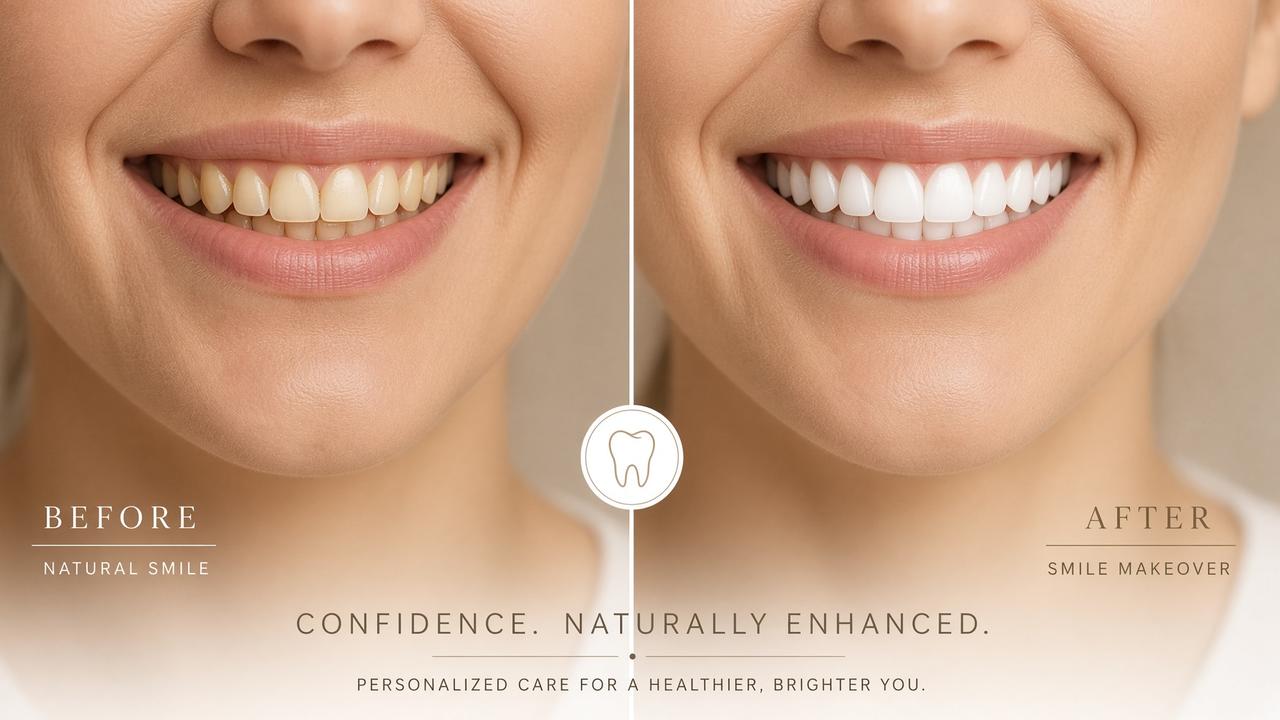
Every mouth responds differently. Surface stains often respond well, while some deeper stains lighten only partly or take longer. We will give you an honest idea of what to expect after looking at your teeth.
Is whitening okay for teenagers?
The American Academy of Pediatric Dentistry discourages full-mouth cosmetic whitening for children who still have baby teeth or a mix of baby and adult teeth. For teens, we recommend talking with us first.
Sources
American Dental Association, Oral Health Topics: Tooth Whitening — https://www.ada.org/resources/ada-library/oral-health-topics/whitening
American Dental Association, MouthHealthy: Teeth Whitening — https://www.mouthhealthy.org/all-topics-a-z/teeth-whitening
This article is for general education and is not a substitute for a dental exam. Please talk with your dentist about your specific situation.