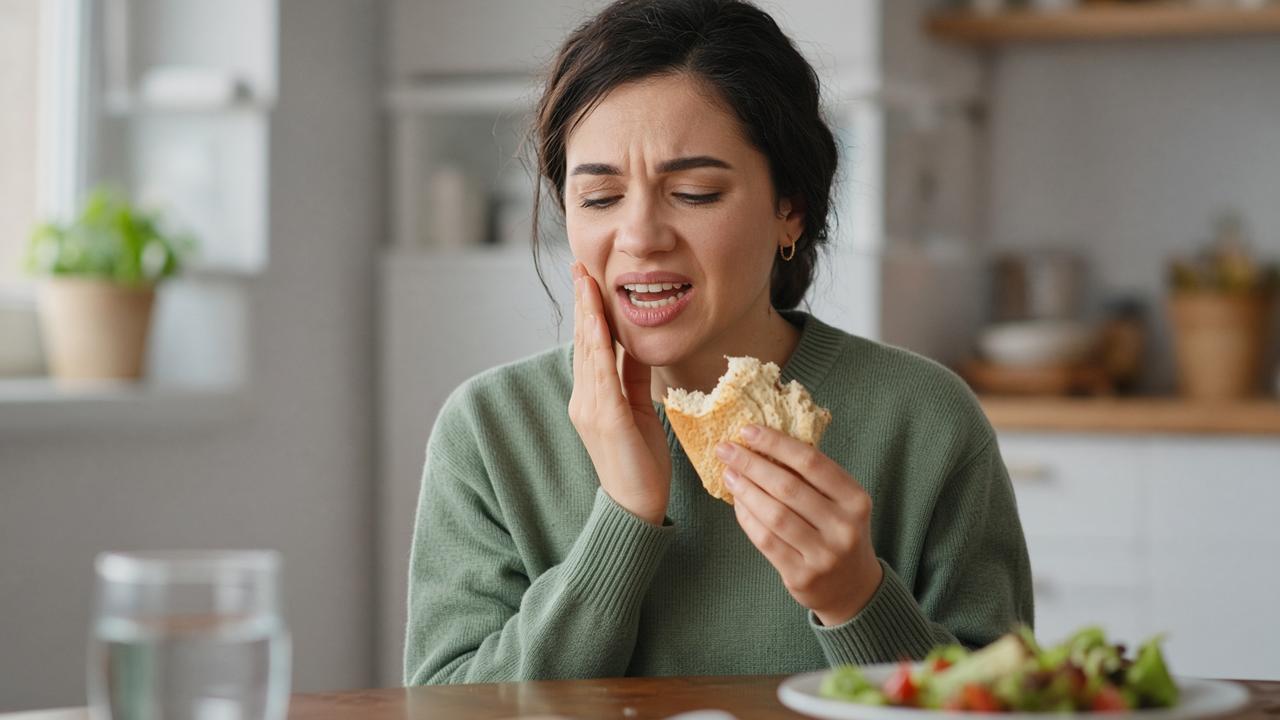
You slept a full night, you didn't drink the evening before, and still you wake up with a dull ache in your temples or forehead. Headaches have many causes, and some need a physician rather than a dentist. But one of the most commonly overlooked causes of morning headaches is something that happens in your mouth while you sleep: clenching or grinding your teeth.
This article explains how the teeth and jaw can contribute to morning headaches, the signs we look for, and what treatment usually involves.
How clenching and grinding can cause headaches
Clenching or grinding during sleep is called sleep bruxism. Most people who do it don't know, because it happens unconsciously. Often a bed partner hears it first, or a dentist notices the wear.
When you clench, the large chewing muscles on the sides of your face (the masseter) and at your temples (the temporalis) contract hard, sometimes for long stretches. Like any muscle worked hard for hours, they can be sore and tight in the morning. Because the temporalis muscle sits right where many people feel tension headaches, that soreness is often felt as a headache in the temples, rather than as jaw pain.
The jaw joints (temporomandibular joints, or TMJ) can also become strained. TMJ problems can cause pain in front of the ears, clicking, limited opening, and aching that spreads to the face, head, and neck.
Signs that your teeth or jaw may be involved
A dental cause is more likely if your headaches:
Are worst when you wake up and ease as the day goes on
Come with sore jaw muscles, a tired jaw, or tenderness at the temples
Come with clicking, popping, or pain near the ears when you chew or yawn
And if you notice any of these in your mouth:
Flattened, chipped, or worn edges on your teeth
Teeth that feel sensitive for no obvious reason
A scalloped edge on the sides of your tongue, or a white line on the inside of the cheek
Broken fillings or cracked teeth
A bed partner who hears grinding
Why people grind or clench
There usually isn't a single cause. Stress and anxiety play a role for many people. Caffeine, alcohol, and nicotine close to bedtime can increase it. Some medications are associated with bruxism. There is also a well-recognized link between sleep bruxism and sleep-disordered breathing, such as snoring and obstructive sleep apnea. That is one reason we ask about snoring, daytime sleepiness, and how rested you feel. If those point toward a sleep problem, we recommend talking with your physician about a sleep evaluation.
When a headache is not a dental problem
Please see a physician promptly, or seek emergency care, for a headache that is sudden and severe, the "worst headache of your life," or comes with fever, a stiff neck, confusion, weakness, vision changes, or trouble speaking. Also see your doctor for headaches that are new after age 50, that keep getting worse, or that follow a head injury. A dentist can help with jaw- and teeth-related causes, but we don't want a dental explanation to delay care for something else.
What helps
A custom night guard. A hard or dual-layer night guard made from impressions or a scan of your teeth is often the first step. It doesn't necessarily stop the clenching, but it protects your teeth from wear and can reduce the strain on the muscles and joints. Many patients report fewer or milder morning headaches once they wear it consistently. Over-the-counter guards can be a short-term option, but soft, poorly fitting guards encourage some people to chew on them.
Daytime habit awareness. Many people also clench during the day while concentrating, driving, or at a computer. A simple rule helps: lips together, teeth apart, jaw relaxed. Set reminders if needed.
Sleep and evening habits. Cutting back on caffeine later in the day, limiting alcohol before bed, and a consistent wind-down routine may help.
Jaw care. For sore muscles, warm compresses, gentle stretching, softer foods for a few days, and avoiding gum chewing can help. Your dentist or physician may suggest physical therapy for persistent jaw muscle or joint problems.
Fixing damage. If grinding has chipped or worn teeth, we can repair them, but usually only after a night guard is in place so the new work is protected.
Other options. For some patients with persistent, severe muscle pain, providers may discuss other treatments. We'll talk through whether anything beyond a night guard makes sense for you, and refer you when it does.
What to expect at Ling Zhu DDS
At an exam in our Agoura Hills office, we check for tooth wear, cracks, and broken restorations. We gently feel the jaw muscles and joints, check how wide you can open, and listen for joint sounds. We ask about your headache pattern, sleep, snoring, and stress. If a night guard is appropriate, we take impressions or a scan, and you return to have it fitted and adjusted so your bite feels even. We also schedule follow-up to see how you're doing.
We see patients in English and Mandarin, and we'll explain what we find in plain language.
The bottom line
If you often wake with a headache and also notice jaw soreness, tooth wear, or grinding, your teeth may be part of the picture. A dental exam can check for signs of bruxism, and a custom night guard is a simple, reversible first step for many people. Headaches with warning signs should always be checked by a physician first.
Wondering if clenching is behind your headaches? Request an appointment with Ling Zhu DDS Dental in Agoura Hills.
Sources and further reading
American Dental Association, MouthHealthy: Teeth grinding
National Institute of Dental and Craniofacial Research: TMD (temporomandibular disorders)