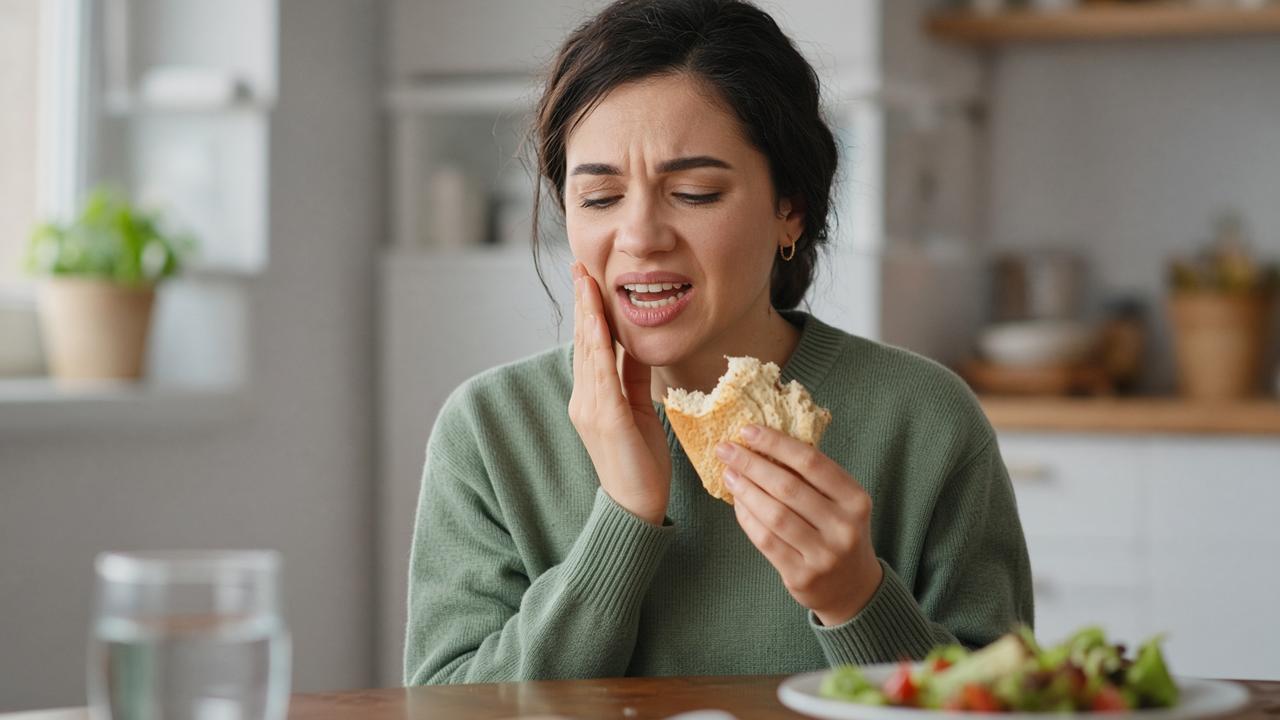
You bite into something simple — a sandwich, an apple, or even just close your teeth — and a sharp or dull pain shoots through one tooth.
This type of pain is extremely common, yet many people ignore it until it becomes severe. Pain when biting is rarely random. It is usually your tooth’s way of signaling that something is wrong.
Understanding the cause early can mean the difference between a simple fix and a root canal, crown, or even tooth loss.
Why Biting Pain Is Different from Other Toothaches
Not all tooth pain is the same.
- Sensitivity to cold often points to enamel wear or exposed roots.
- Constant throbbing pain frequently signals infection.
- Pain specifically when biting or releasing pressure is often related to a crack, inflamed ligament, or problem with how the teeth come together.
This distinction is important because the treatment path can be very different.
Most Common Causes of Pain When Biting
1. Cracked or Fractured Tooth
One of the leading causes. A crack can be tiny and invisible to the naked eye. When you bite, the crack flexes slightly and irritates the nerve inside the tooth. Pain often occurs on release of the bite rather than on the initial pressure.
2. Loose or Damaged Filling
An old filling can develop a gap or crack. Food and bacteria enter underneath, and pressure from biting causes pain.
3. High Filling or Crown
After a new filling or crown is placed, it may sit slightly too high. This creates excess pressure on that tooth every time you bite.
4. Pulpitis or Nerve Inflammation
When the nerve inside the tooth becomes inflamed (often from deep decay), biting pressure increases blood flow and pressure inside the tooth, causing pain.
5. Periodontal Ligament Inflammation
The tiny ligaments that hold the tooth in the socket can become inflamed from grinding, trauma, or infection. This makes the tooth tender to pressure.
6. Sinus Pressure
Upper back teeth roots sit close to the sinus cavity. Sinus infections or congestion can create a feeling of pain when biting on upper teeth.
7. Bruxism (Teeth Grinding)
Chronic grinding can bruise the ligaments around teeth and create micro-cracks, leading to bite sensitivity.
How to Tell If It’s Serious
Seek dental care promptly if you notice any of these:
- Pain that is getting worse
- Pain that lingers after you stop biting
- Swelling of the gums or face
- A bad taste or pus near the tooth
- Sensitivity to both hot and cold in addition to biting pain
- A visible crack, chip, or dark line on the tooth
- Difficulty opening your mouth or swelling in the jaw
Waiting often allows a small problem to become a much larger one.
What You Can Do at Home (Temporary Relief)
While waiting for your appointment:
- Avoid chewing on that side of the mouth
- Stick to softer foods
- Take over-the-counter anti-inflammatory medication (such as ibuprofen) if safe for you
- Rinse with warm salt water
- Avoid extreme temperatures
Do not place aspirin directly on the gum or tooth — this can burn the tissue.
What the Dentist Will Check
A proper evaluation usually includes:
- Visual examination and magnification
- Bite tests (using special tools to pinpoint the painful tooth)
- X-rays or 3D imaging when needed
- Checking for cracks with strong light or dye
- Evaluating your bite and existing restorations
In some cases, a cracked tooth is only visible once the filling is removed or under a microscope.
Treatment Options Depend on the Cause
- High filling or crown → Simple adjustment
- Small crack or damaged filling → New filling or bonding
- Deeper crack or nerve involvement → Crown or root canal + crown
- Severe crack extending below the gum → Extraction and replacement (implant or bridge)
- Sinus-related pain → May require medical evaluation in addition to dental care
The goal is always to save the natural tooth whenever possible.
Why Early Treatment Matters
A tooth that hurts only occasionally when biting can progress to constant pain, infection, or complete fracture. What could have been treated with a simple filling or crown may later require a root canal or extraction if ignored.
Patients who address biting pain early almost always have more conservative and less expensive treatment options.
Prevention Tips
- Wear a night guard if you grind your teeth
- Avoid chewing ice, hard candy, or other extreme hard foods
- Maintain regular dental checkups so small cracks or failing fillings are caught early
- Address grinding or clenching habits
- Keep existing fillings and crowns well-maintained
Tooth pain when biting should not be ignored.
Book your appointment with Dr. Ling Zhu at Ling Zhu DDS in Agoura Hills. We carefully diagnose the true cause of biting pain and recommend the most conservative treatment that will protect your tooth long-term.