You want a better smile. Maybe you have chips, gaps, stains, or uneven edges.
Two of the most popular solutions dentists offer are composite bonding and porcelain veneers. They can look similar in photos, but they are very different treatments in real life.
Choosing the wrong one can mean spending thousands more than necessary — or ending up with results that don’t last as long as you hoped.
Here’s a clear, honest comparison to help you decide which is truly better for your situation in 2026.
What Is Composite Bonding?
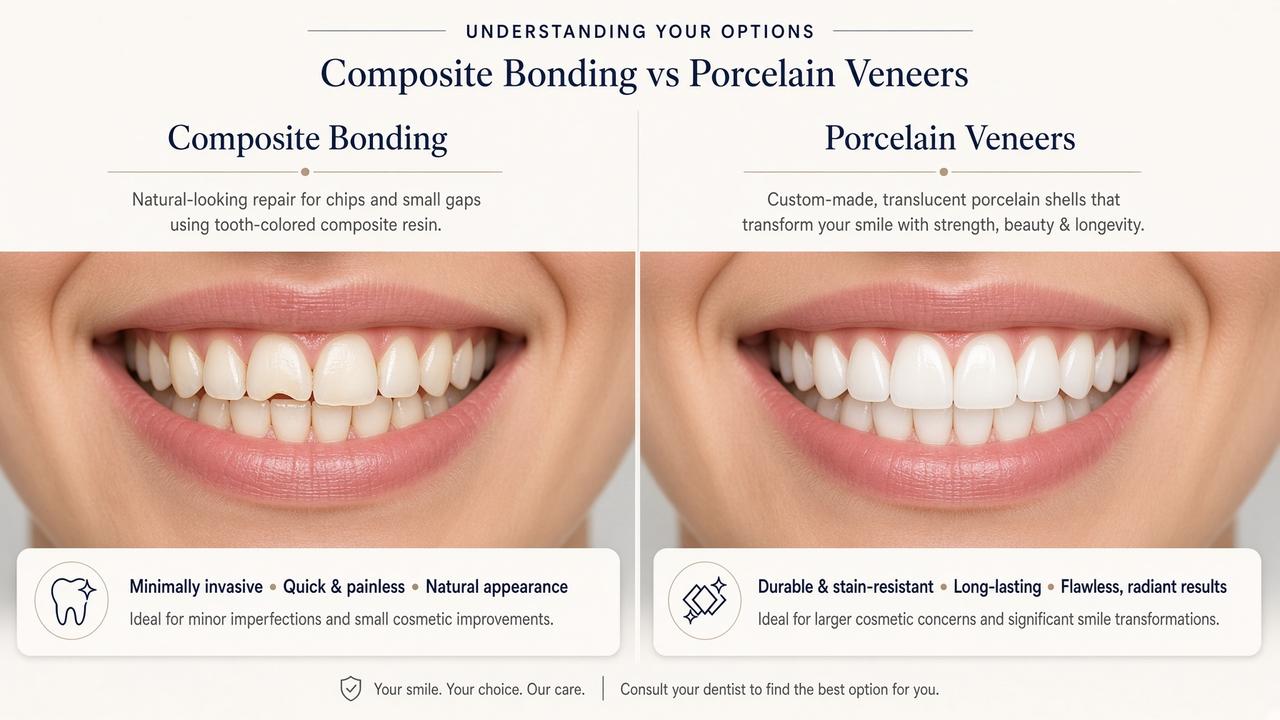
Composite bonding uses a tooth-colored resin material that is applied directly to the tooth, shaped, and hardened with a special light. It can fix chips, close small gaps, change shape, and improve color in a single visit.
Key advantages:
- Much more affordable
- Minimally invasive (little to no enamel removal)
- Can often be completed in one appointment
- Reversible in many cases
Key limitations:
- Not as stain-resistant as porcelain
- Generally lasts 5–8 years with good care
- Can chip more easily than veneers
What Are Porcelain Veneers?
Porcelain veneers are thin, custom-made shells of high-quality ceramic that are bonded to the front of the teeth. They are fabricated in a dental lab and require more preparation.
Key advantages:
- Excellent stain resistance
- Highly natural appearance and light reflection
- Longer lifespan (typically 10–15+ years)
- Better for more significant changes in shape and color
Key limitations:
- Higher cost
- Requires removal of a small amount of enamel (usually irreversible)
- Takes two or more appointments
Side-by-Side Comparison
Appearance
Porcelain veneers generally win for a more lifelike, translucent look. High-quality composite can look very good, especially in the hands of a skilled dentist, but porcelain still has the edge in mimicking natural enamel.
Durability
Veneers are significantly more resistant to staining and chipping. Bonding is more prone to wear and discoloration over time, especially if you drink coffee, tea, red wine, or smoke.
Cost (2026 averages)
- Composite bonding: $300 – $800 per tooth
- Porcelain veneers: $1,200 – $2,500 per tooth
A full smile of bonding can cost a fraction of a full set of veneers.
Treatment Time
Bonding is usually completed in one visit. Veneers typically require at least two visits (preparation + placement).
Invasiveness
Bonding is conservative. Veneers usually involve removing a thin layer of enamel so the final result doesn’t look bulky.
Who Should Choose Composite Bonding?
Bonding is often the smarter choice if:
- You want to fix minor chips, gaps, or shape issues
- You’re on a tighter budget
- You want a less permanent option
- You’re younger and may want different options later in life
- You only need small improvements
Who Should Choose Porcelain Veneers?
Veneers are usually better if:
- You want a more dramatic and long-lasting transformation
- You have significant discoloration that whitening can’t fix
- You want maximum stain resistance
- You’re willing to invest more for longevity and aesthetics
- You have multiple teeth that need reshaping
The Hybrid Approach Many Dentists Recommend
In 2026, many experienced cosmetic dentists don’t treat this as an either/or decision.
Some patients get veneers on the most visible front teeth and bonding on teeth that need only minor corrections. Others start with bonding to “test drive” a new smile before committing to veneers later.
Important Questions to Ask Your Dentist
- How much enamel will be removed?
- Can I see before-and-after photos of similar cases you’ve done?
- What is the expected lifespan of the material you’re recommending?
- What happens if the bonding or veneer chips in a few years?
- Is there a more conservative option that could still meet my goals?
Final Verdict
There is no universal winner.
- Choose composite bonding if you want an affordable, conservative, and relatively reversible improvement.
- Choose porcelain veneers if you want the most durable, stain-resistant, and premium aesthetic result and are prepared for the higher investment.
The best decision comes from a thorough consultation where your dentist evaluates your bite, enamel, goals, and budget — not from a one-size-fits-all recommendation.
Ready to find out which option is right for your smile?
Book a cosmetic consultation with Dr. Ling Zhu at Ling Zhu DDS in Agoura Hills. We’ll examine your teeth, discuss your goals, and give you an honest recommendation — whether that’s bonding, veneers, or a simpler solution.