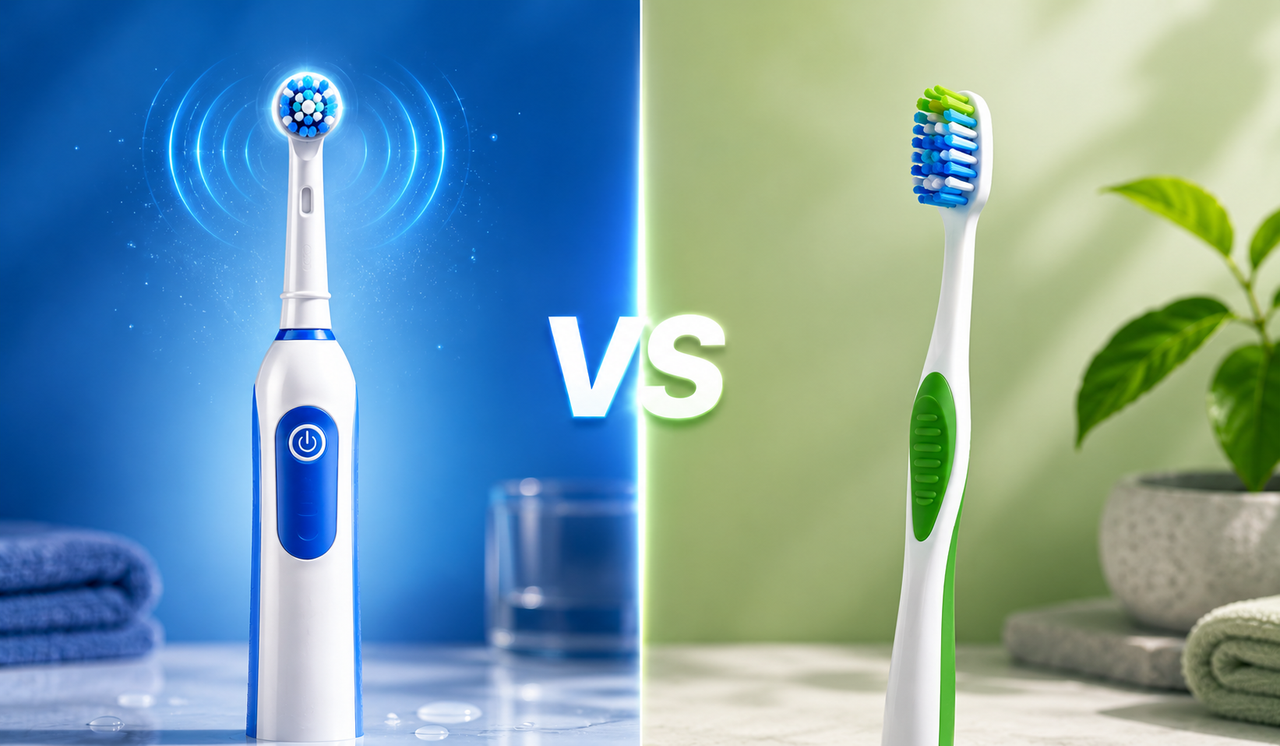
It’s one of the most common questions we hear at Ling Zhu DDS: “Should I switch to an electric toothbrush?”
With so many models on the market and conflicting opinions online, it’s easy to feel overwhelmed. Some people swear by their manual brush, while others won’t go back after trying an electric one.
So which is actually better?
We’ve reviewed the latest clinical studies, ADA recommendations, and real patient outcomes to give you a clear, unbiased comparison.
Cleaning Effectiveness
Winner: Electric Toothbrush
Multiple large-scale studies show electric toothbrushes remove significantly more plaque than manual brushing.
A 2014 Cochrane review found that electric brushes reduce plaque by 21% more and gingivitis by 11% more than manual brushes after 3 months of use. The oscillating-rotating and sonic technologies are particularly effective at reaching areas that are difficult with a manual brush.
Manual brushes rely entirely on your technique and consistency. Many people simply don’t brush long enough or use the correct method, leaving plaque behind.
Gum Health
Winner: Electric Toothbrush
Electric brushes are generally gentler on gums when used correctly. Most models have pressure sensors that stop brushing if you press too hard, reducing the risk of gum recession.
However, if you already have sensitive gums or recession, a high-quality soft manual brush used with proper technique can sometimes be gentler.
Ease of Use & Convenience
Winner: Electric Toothbrush
Electric brushes do most of the work for you. The built-in timer ensures you brush for the recommended 2 minutes, and many models have quadrant timers to help you cover all areas evenly.
This is especially helpful for children, elderly patients, and people with limited dexterity.
Cost Comparison
Winner: Manual Toothbrush (Short Term)
A good manual toothbrush costs $3–$8 and lasts 3 months.
Electric toothbrushes have a higher upfront cost ($30–$250 for the handle + heads). Replacement heads cost $4–$10 every 3 months.
However, when you factor in better cleaning and potential savings from fewer dental visits due to improved oral health, many people find electric brushes more cost-effective long-term.
Battery Life & Portability
Winner: Manual Toothbrush
No charging required. You can take a manual brush anywhere without worrying about battery life.
Modern electric brushes have improved significantly, with many offering 2+ weeks of use per charge, but they still require planning.
Special Needs
Electric wins for:
- Children (fun timers and apps)
- People with arthritis or limited hand mobility
- Patients with braces or orthodontic appliances
- Anyone wanting maximum plaque removal
Manual can be better for:
- Travelers who don’t want to carry chargers
- People who prefer complete control over pressure
- Those on a very tight budget
Our Recommendation at Ling Zhu DDS
For the vast majority of our patients, we recommend a quality electric toothbrush with oscillating-rotating or sonic technology.
The clinical evidence is clear: consistent use leads to better plaque removal, healthier gums, and fewer cavities over time.
Top Picks in 2026:
- Best Overall: Oral-B iO Series
- Best Value: Sonicare ProtectiveClean
- Best for Sensitive Gums: Philips Sonicare with Gentle mode
- Best Budget: Oral-B Vitality
Final Verdict
Electric toothbrush is generally superior for cleaning power, gum health, and long-term results.
However, the best toothbrush is ultimately the one you will use correctly and consistently every day.
If you love your manual brush and use proper technique for a full 2 minutes twice daily, it can still be very effective. But for most people, switching to a good electric brush is one of the highest-return investments you can make in your oral health.
Ready to upgrade your oral care routine?
Book your appointment with Dr. Ling Zhu at Ling Zhu DDS in Agoura Hills. We’ll evaluate your current routine and recommend the best toothbrush and techniques for your specific needs.