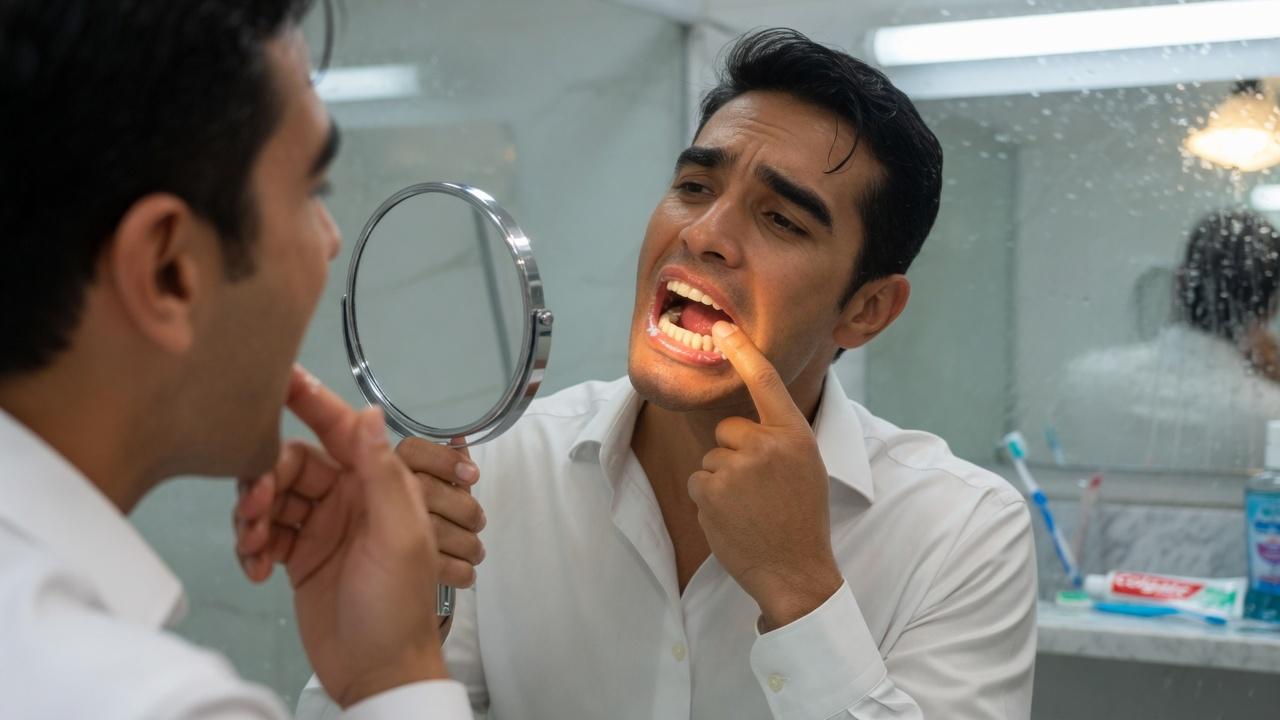
Many people first notice receding gums in the mirror. A tooth suddenly looks a little longer than its neighbors. There's a small notch you can feel with your fingernail right where the tooth meets the gum. Or a sip of ice water sends a quick, sharp zing through one spot.
Gum recession means the gum tissue has pulled back from the tooth, exposing more of the tooth, and sometimes part of the root. It's common, it usually happens slowly, and it's often painless at first, which is exactly why it's easy to miss.
The reassuring part: recession that's caught early can often be slowed or stopped, and there are good options when more help is needed. This guide covers what to look for, why it happens, what you can do starting tonight, and what a dental visit for recession actually involves.
What gum recession is (and why it matters)
Healthy gums fit snugly around each tooth like a collar. They cover and protect the root, which doesn't have the hard enamel shell that the crown of the tooth has. When the gum line moves down (or up, on the top teeth), the root surface is left exposed.
That matters for a few practical reasons:
Sensitivity. The American Dental Association notes that dentin, the layer under enamel, may be exposed when gums recede, and exposed dentin is a common cause of tooth sensitivity.
Cavities on the root. Root surfaces are softer than enamel, so they can decay more easily, and these cavities sit right at the gumline where they're hard to see.
Appearance. Teeth can look longer or uneven, and small dark triangles can appear between teeth.
A clue about gum health. Recession is sometimes a sign of gum disease. The National Institute of Dental and Craniofacial Research lists checking for gums receding away from the teeth as part of a standard gum examination.
Gum tissue that has receded doesn't grow back on its own. That's why the goal is to find it early and protect what you have.
Early warning signs to watch for
You don't need special tools to notice most of these. Look in a well-lit mirror and pay attention for a week or two:
A tooth (often a canine or premolar) looks longer than the teeth next to it
A notch, ridge, or rough edge you can feel near the gumline
A quick, sharp sensitivity to cold, sweets, or brushing in one specific spot
The gum edge looks thin, shiny, or slightly see-through over a tooth
Small dark spaces opening up between teeth near the gums
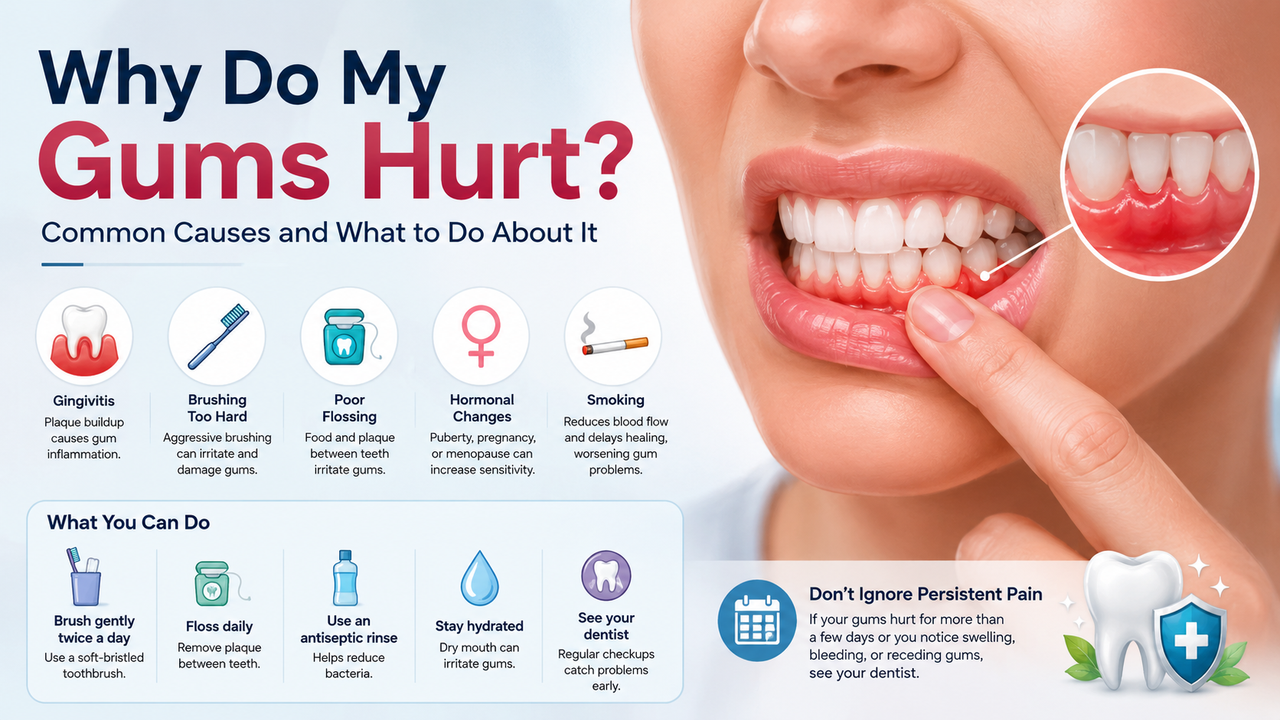
Gums that bleed when you brush or floss, or look red and puffy
A tooth that feels a little loose, or a change in how your teeth fit together
Bleeding, swelling, or looseness point more toward gum disease and are worth an appointment soon rather than "next time."
Common causes
Recession rarely has just one cause. Often it's a combination of a few of these.
1. Gum disease (periodontitis). Plaque and tartar along and below the gumline cause inflammation that, over time, can break down the gum and bone that support the teeth. The NIDCR identifies smoking or using tobacco as the most significant risk factor for gum disease.
2. Brushing too hard. Scrubbing with a lot of pressure, especially with a hard-bristled brush, can wear the gum back over the years. People who are very diligent about brushing are sometimes the ones who see this kind of recession. The ADA recommends a soft-bristled toothbrush.
3. Clenching and grinding. Heavy forces from grinding, often at night, can contribute to recession and to notches near the gumline. Many people who grind don't know they do it. (Our post on night guards vs. mouth guards covers the signs.)
4. Thin gum tissue. Some people are simply born with thinner gums or teeth positioned slightly outside the bone, which makes recession more likely even with good habits.
5. Tooth position and orthodontic movement. Crowded or tilted teeth can have less bone and gum covering them on one side.
6. Lip or tongue piercings. Jewelry that rubs against the gum can wear it away in that one spot.
7. Tobacco use. Besides raising the risk of gum disease, tobacco can hide warning signs like bleeding, so problems can progress quietly.
What you can do starting tonight
These steps won't reverse recession, but they're the foundation for keeping it from getting worse.
Your gentle-brushing checklist:
Switch to a soft-bristled brush (or a soft head on an electric brush)
Hold the brush like a pencil, not a fist, so you naturally use less pressure
Angle the bristles about 45 degrees toward the gumline and use short, gentle strokes
If your electric brush has a pressure sensor, pay attention when it lights up
Brush for two minutes, twice a day; more force doesn't mean cleaner teeth
Clean between your teeth once a day with floss or another interdental cleaner
Try a toothpaste for sensitive teeth if cold drinks bother you, and give it a few weeks
Other habits that help:
If you use tobacco, ask your dentist or doctor about support to quit. It's one of the most helpful things you can do for your gums.
If you wake up with a sore jaw or headaches, mention it at your next visit; a night guard may be worth discussing.
If you have a lip or tongue piercing, watch the gum next to it and consider removing the jewelry if that area is changing.
Not sure whether you brush too hard? Look at your toothbrush after a month. If the bristles are splayed outward, that's a good hint you're pressing harder than you need to. (Our electric vs. manual toothbrush post has more on choosing a brush.)
What happens at a dental visit for receding gums
Knowing what to expect can make it easier to book. A typical evaluation includes:
A look and a measurement. Your dentist or hygienist checks the gum line on each tooth and measures how much root is exposed and how deep the gum pockets are. (If you've ever wondered what those numbers mean, see our guide to gum pocket numbers.)
X-rays if needed to see the bone level around the teeth.
A conversation about causes: brushing habits, grinding, tobacco, medical history, and any recent changes.
A plan matched to what's found. Many people only need monitoring and a few habit changes.
Depending on the cause and how far it has gone, options your dentist may discuss include:
Monitoring with photos or measurements, so you both know whether it's stable or changing
Professional cleaning, or a deeper cleaning below the gumline (scaling and root planing) when gum disease is involved
Desensitizing treatments for sensitive root surfaces
Tooth-colored bonding to cover notches or exposed root areas that are sensitive or prone to decay
A night guard if grinding is part of the picture
Referral to a gum specialist (periodontist) to discuss gum grafting or other procedures when recession is more advanced or keeps progressing
Every mouth is different, and not every option fits every situation. The point of the visit is to understand why it's happening for you, so the fix addresses the cause and not just the symptom.
Questions to bring to your appointment
Write these down or keep them on your phone:
Is my recession stable, or is it getting worse?
What do you think is causing it in my case?
Is there any sign of gum disease?
Am I brushing too hard? Can you show me the right pressure and angle?
Do I show signs of grinding or clenching?
Is the sensitive spot a cavity, exposed root, or something else?
How often should we re-check this area?
At what point would you suggest seeing a periodontist?
When to call sooner
Book a visit soon if you notice gums that bleed regularly, gums that are swollen or tender, a tooth that feels loose, a bad taste or bump on the gum, or recession that seems to be changing quickly. Seek care urgently if you have facial swelling, fever, or pain that is getting worse fast.
Frequently asked questions
Can receding gums grow back? Gum tissue that has receded doesn't regrow on its own. Early recession can often be stopped from getting worse with gentler brushing and treatment of any gum disease, and procedures such as gum grafting can cover some exposed roots when that's appropriate.
Is gum recession the same as gum disease? Not always. Gum disease is one common cause, but recession can also come from brushing too hard, grinding, thin gum tissue, or tooth position. A gum exam helps sort out which one, or which combination, is involved.
Why are only one or two teeth affected? Recession often shows up first on teeth that get the most brushing pressure or sit slightly outside the bone, like canines and premolars. Spot-specific recession is a good reason to look at technique and bite.
Does sensitive-teeth toothpaste fix recession? It can help with the zing from exposed roots, but it doesn't change the gum line. If sensitivity doesn't improve after a few weeks, it's worth having it checked, since a cavity or crack can feel similar.
Is it too late if my gums have already receded a lot? No. Even with advanced recession, protecting the remaining gum and bone, treating sensitivity, and preventing root cavities all make a real difference. Your dentist can talk you through options, including a specialist opinion.
We're here to help
If your teeth look a little longer than they used to, or one spot keeps zinging, Dr. Ling Zhu and Dr. Leshin Chen can take a careful look, measure what's going on, and walk you through practical next steps in English or Mandarin. We're at 5601 Kanan Road in Agoura Hills, serving patients from Thousand Oaks, Calabasas, and nearby communities.
Call (818) 991-8881 or book online. Our hours are Monday, Tuesday, Wednesday, and Friday 9–6, and the 1st and 3rd Saturday of each month 8–5 (closed Thursdays).
This article is for general education and isn't a substitute for an exam. Please talk with your dentist about your specific situation.